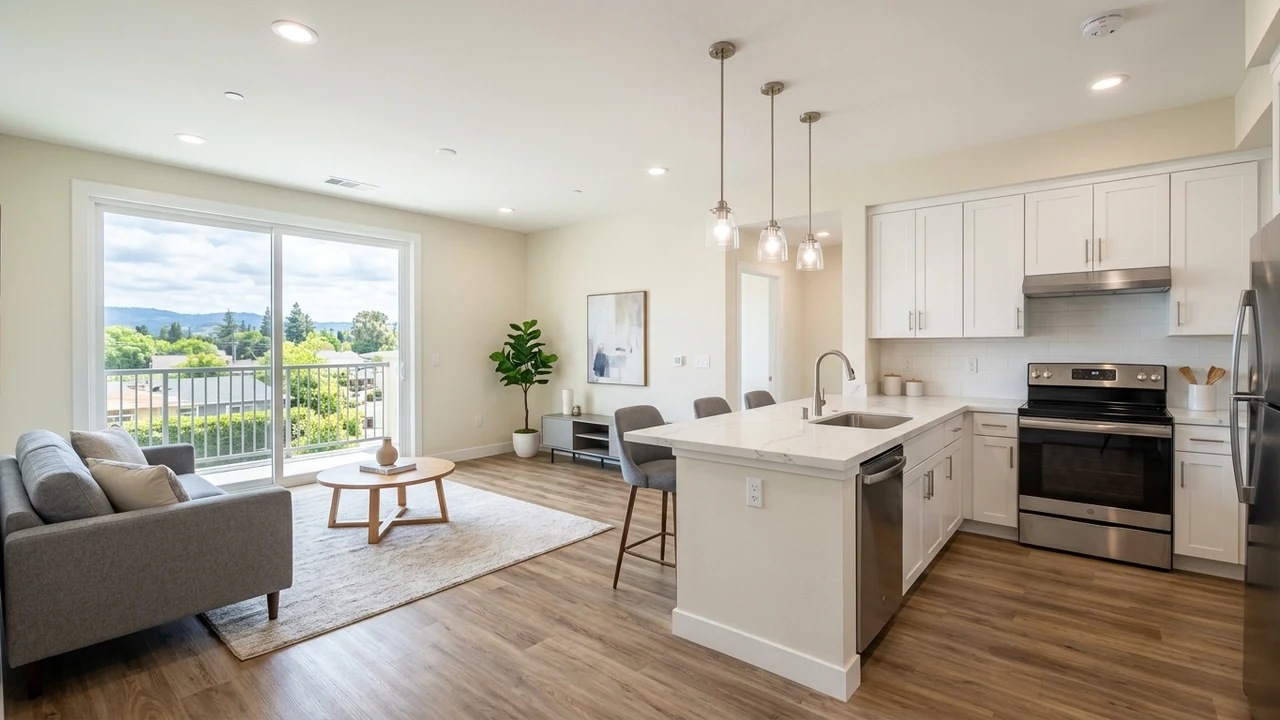
The Economics of Vacancy: Compressing the Apartment Turnover Cycle
In Northern California’s highly competitive multifamily rental market – spanning San Francisco, Oakland, San Jose, and the East Bay corridor – apartment unit vacancy represents one of the largest controllable drains on net operating income (NOI). For property management companies, asset managers, and institutional landlords, every day a vacant unit sits in turnover limbo equates to irrecoverable lost gross rent.
In a market where market rents average $2,400 to $3,800 per month, an extended thirty-day turnover costs between $80 and $125 per day in pure vacancy loss – totaling $2,400 to $3,750 per unit turn before calculating material and labor expenses. By implementing a standardized Class B contractor turnover framework, forward-thinking property managers compress turn cycles from three to four weeks down to five to seven business days. Achieving this speed requires transitioning from reactive patch-and-repair maintenance to high-durability material specifications and parallel trade scheduling.
Eliminating the Carpet Replacement Cycle with Rigid Core SPC Vinyl Plank
Traditional broadloom carpet has historically been the primary operational bottleneck in multi-family property turnovers. Carpet harbors allergens, retains pet odors, stains easily, and rarely survives more than two tenant cycles, requiring frequent replacement and deep cleaning cycles that delay re-leasing:
| Flooring System | Installed Cost / Life Expectancy | Turnover Performance & Acoustic Rating |
|---|---|---|
| Commercial Rigid Core SPC Vinyl Plank | $3.80 – $5.50 / sq. ft. installed; 10 to 15+ years | 100% waterproof limestone composite core; 20-mil commercial wear layer; IIC 54+ acoustic backing; wipe-clean turnover in 1 hour |
| Traditional Multifamily Broadloom Carpet | $2.20 – $3.20 / sq. ft. installed; 2 to 3 years | High stain and odor absorption; steam cleaning drying delay (48 hours); requires frequent replacement between tenants |
Upgrading to a stone plastic composite (SPC) luxury vinyl plank with a minimum 20-mil commercial wear layer and pre-attached high-density acoustic rubber underlayment satisfies California multi-family sound transmission standards (minimum IIC 50 and STC 50 ratings under CBC Section 1206) while virtually eliminating flooring turnover costs for a decade.
Kitchen and Bathroom Durability Engineering: Cabinets, Counters, and Hardware
Apartment kitchens and bathrooms absorb the heaviest tenant wear and tear. Standard particleboard builder-grade cabinetry swells and delaminates upon minor water exposure, resulting in costly cabinet replacements during turnovers. Implementing high-durability specifications protects capital investments:
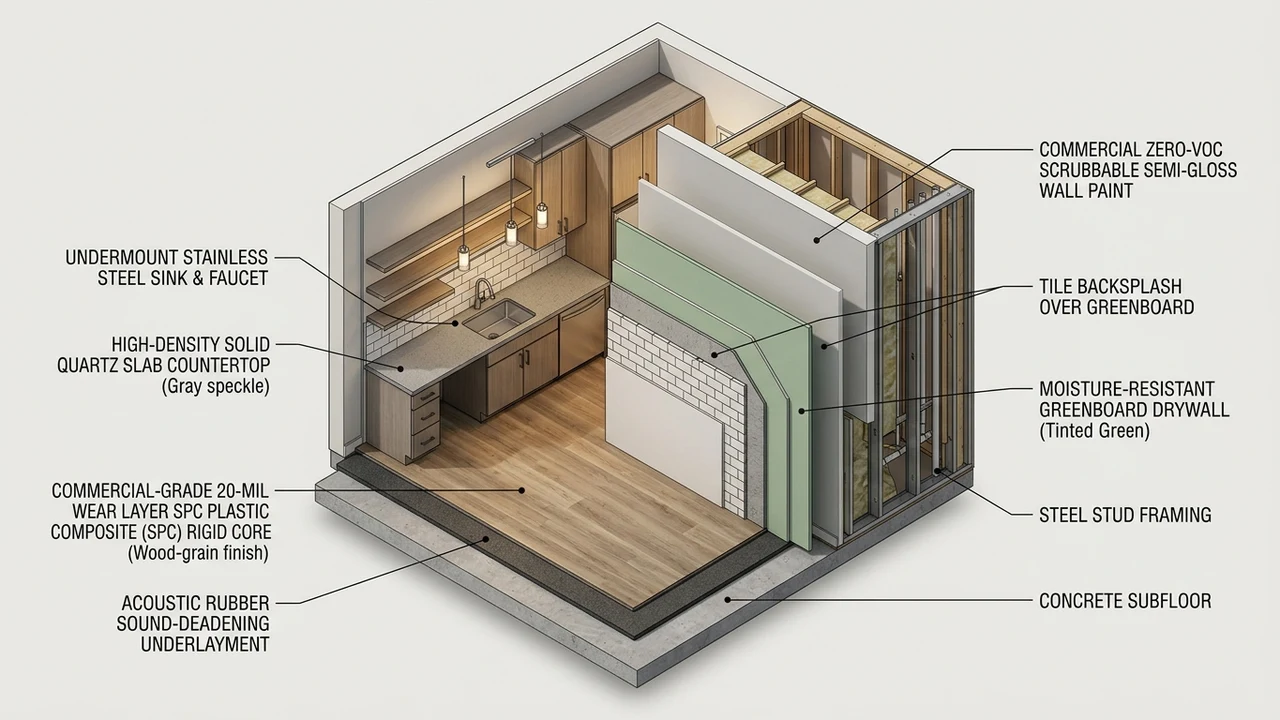
- All-Plywood Cabinet Construction: Specify solid wood shaker door frames with 1/2-inch or 3/4-inch multi-ply cabinet boxes (never particleboard or MDF). Plywood boxes resist moisture swelling beneath sinks and allow hinge screws to hold firmly over decades of use.
- High-Density Engineered Quartz Slab Countertops: Replace laminate and porous granite with solid engineered quartz (minimum 2cm or 3cm thickness with eased edges). Quartz is non-porous, stain-resistant, scratch-resistant, and requires zero chemical sealing. Undermount stainless steel sinks eliminate countertop laminate seams where water seeps and causes delamination.
- Commercial Cartridge Plumbing Fixtures: Standardize on commercial-grade, washerless ceramic disc cartridge faucets (e.g., Moen or Delta commercial series). Standardizing one model across an entire portfolio allows maintenance staff to stock a single replacement cartridge, cutting repair times to fifteen minutes.
- Ceramic Tile Backsplashes over Greenboard: Installing subway tile backsplashes over moisture-resistant gypsum board (greenboard) behind stoves and sinks prevents food grease and moisture from damaging drywall, converting wall prep into a five-minute wipe-down.
Standardizing finishes across all property units dramatically reduces inventory holding costs and accelerates material delivery.
Standardized Painting Protocols and Commercial Washable Coatings
Painting often accounts for the single largest recurring labor expense during apartment turnover. Transitioning to commercial-grade washable coatings eliminates the need for full unit repainting on every turn:
- Single Neutral Color Specification: Maintain a universal color formula across all portfolio units (e.g., modern warm off-white or greige) with a standardized 100% acrylic washable eggshell enamel on walls and semi-gloss enamel on doors, baseboards, and trim.
- Washable Resin Technology: High-solids, 100% acrylic washable eggshell paints allow maintenance technicians to wash off scuffs, crayon marks, and handprints using mild detergent and microfiber cloths, eliminating the need to repaint entire rooms for minor scuffs.
- Surface Armor at High-Traffic Corners: Installing flush PVC or clear polycarbonate corner guards on high-traffic hallway corners and entryways prevents moving cart gouges and sheetrock damage during move-ins.
Eliminating two out of every three full repaint cycles saves hundreds of dollars per unit turn and accelerates re-leasing schedules.
Synchronized Contractor Project Management and Parallel Trade Scheduling
The secret to executing a five-day unit turnover lies in synchronized scheduling and parallel trade sequencing. In traditional property management, work proceeds sequentially (maintenance repairs first, then painter, then flooring installer, then deep cleaning), stretching turnover timelines to three weeks.
A Class B General Building Contractor orchestrates an aggressive parallel schedule:
- Pre-Move-Out Inspection (Day -14): Two weeks prior to tenant lease expiration, a comprehensive walk-through identifies required capital materials, allowing quartz countertops, cabinet doors, and specialty fixtures to be staged in advance.
- Day 1 (Demolition & Rough Trades): Carpet tear-out, removal of damaged cabinetry or countertops, rough plumbing repairs, and electrical outlet/switch replacements occur simultaneously.
- Day 2 (Drywall & Painting): Drywall patch and texture blending completed in morning using rapid-setting 20-minute hot mud; professional airless spray painting of ceilings, walls, and trim completed in afternoon.
- Day 3 (Countertops & Hard Flooring): Solid quartz countertop templating/installation and luxury vinyl plank flooring installation across living areas and bedrooms.
- Day 4 (Finish Trim & Plumbing Trim): Baseboard installation, cabinet door adjustment, sink/faucet hookups, toilet resealing, and appliance installations.
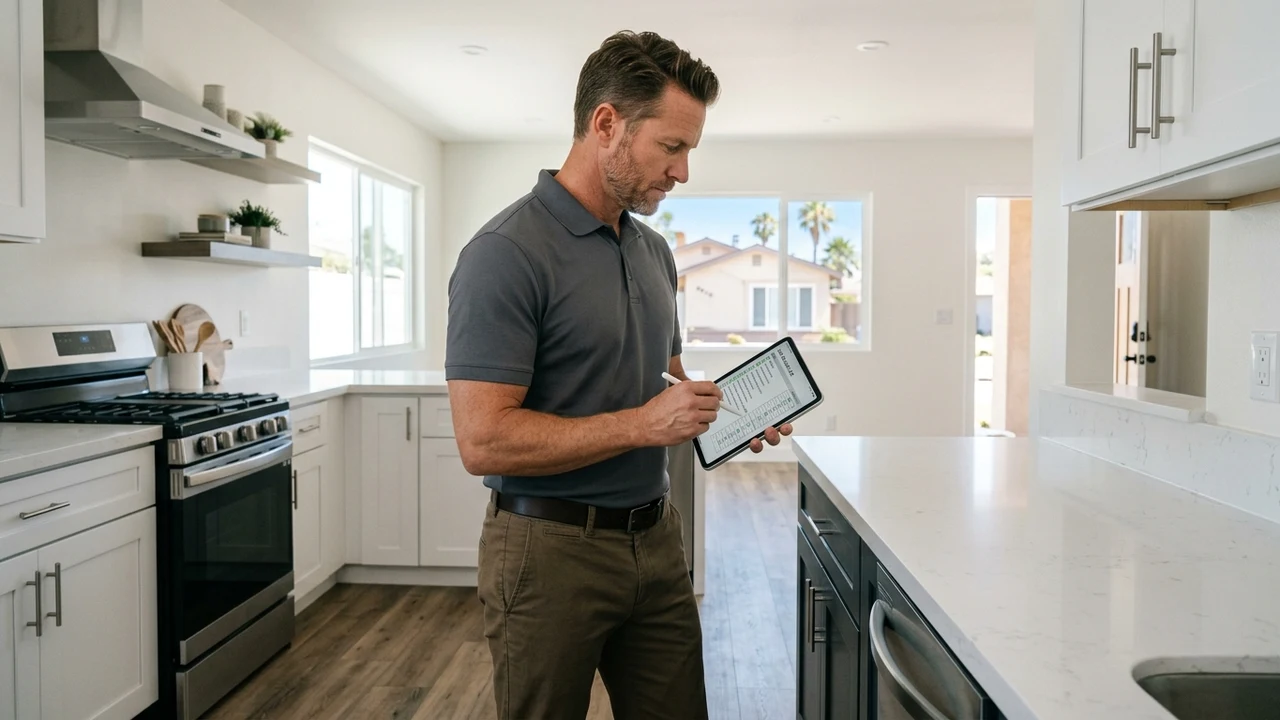
- Day 5 (Punch-List & Turnover Cleaning): Detailed punch-list quality audit using mobile inspection software, professional deep cleaning, window cleaning, and final re-keying.
Compressing the schedule through disciplined trade coordination ensures the property manager delivers a pristine, showroom-ready unit to prospective tenants with minimal vacancy loss.